



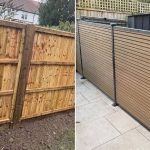




Six inches doesn’t sound like much. It’s barely enough room for a decent-sized plant pot. But move a garden fence six inches in the wrong direction and you could find yourself in a disagreement with your neighbour that costs considerably more than the fencing itself.
Boundary disputes are among the most frustrating problems in residential property. They can sour relationships between people who have lived happily alongside one another for decades, delay house sales and turn a straightforward garden improvement into a legal headache.
The trouble often begins with something entirely innocent. A homeowner decides to replace an ageing boundary, arranges for new garden fencing and assumes the existing fence marks the precise edge of their property.
That assumption isn’t always correct.
An old fence might have been installed slightly inside the boundary. It may have been moved during previous work. A former owner might have agreed to a different position for practical reasons.
By the time somebody notices, the new posts are concreted in and neither neighbour wants to back down.
A fence isn’t necessarily a legal boundary
This is the first misunderstanding worth clearing up.
A physical fence and a legal property boundary are not automatically the same thing.
A fence is a structure. A boundary is the legal division between properties.
Sometimes they coincide perfectly. Sometimes they don’t.
On older properties, fencing may have been replaced several times over the decades. Each installation creates an opportunity for the line to shift slightly, particularly where the original boundary markers have disappeared.
A contractor might follow the existing fence because that appears to be the logical place to install the replacement.
That isn’t unreasonable as a starting point, but it shouldn’t be treated as definitive proof of ownership.
The distinction matters because replacing an existing fence doesn’t necessarily give somebody the right to move it onto neighbouring land.
Nor does a fence having occupied a particular position for many years automatically settle every question about where the legal boundary lies.
There can be complicated legal considerations involving historical agreements, ownership documents and, in some circumstances, long-term possession of land.
Those are matters for properly qualified professionals, not guesses made over a garden wall.
The problem with relying entirely on title plans
One of the first things homeowners do when a boundary disagreement develops is download their title plan from HM Land Registry.
That’s a sensible step.
But there is a catch.
Most registered title plans in England and Wales show general boundaries, not the precise legal boundary measured down to the last centimetre.
The red line on a title plan is useful for identifying the general extent of a property. It usually isn’t sufficient, on its own, to resolve a dispute about whether a fence should sit six inches further to the left or right.
People sometimes enlarge a digital title plan and attempt to measure the boundary using the thickness of the red line.
That can create a false sense of precision.
The underlying mapping has limitations, and enlarging an image doesn’t make it more accurate.
Older conveyancing documents, transfer plans, physical features and historical evidence may provide additional information. In some cases, a specialist boundary surveyor will be needed to interpret that evidence.
The important lesson is simple.
Don’t assume a line on a screen gives you permission to move a physical boundary.
Older Yorkshire properties can be particularly awkward
There are plenty of established residential areas around Barnsley where property boundaries have evolved over many years.
Terraced housing, older semi-detached properties, former industrial areas and gardens that have been altered by successive owners can all present interesting challenges.
Some boundaries were originally marked by walls, hedges or relatively informal structures.
Others may have changed appearance as gardens were landscaped, extensions were built or outbuildings were removed.
A modern timber fence might occupy roughly the same position as an old hedge without following precisely the same line.
That doesn’t automatically mean anything improper has happened.
It simply means the visible arrangement may not tell the complete story.
Sloping gardens introduce another complication.
Where neighbouring properties sit at different levels, deciding where posts should be installed and how retaining structures interact with fencing can require more thought than people expect.
A fence should not be treated as a retaining wall unless it has been specifically designed for that purpose.
These are exactly the situations where a little investigation before work begins can prevent a disproportionate amount of trouble later.
Who actually owns the fence?
Another familiar argument concerns responsibility.
One neighbour believes the fence belongs to the property on the left. The other insists responsibility always falls to the property on the right.
You’ve probably heard the rule that homeowners are responsible for the fence on a particular side of their garden.
Unfortunately, there is no universal rule in England and Wales that automatically assigns fence ownership based on whether it is on the left or right.
Responsibility may be identified in property deeds, transfer documents or agreements between owners.
Sometimes those documents provide clear answers.
Sometimes they don’t.
A title plan may contain markings that are relevant to maintenance obligations, but those markings need to be interpreted in the context of the documents they belong to. Not every plan includes them, and they shouldn’t be treated as a universal ownership code.
There is also a difference between owning a fence and being legally obliged to maintain a boundary structure.
A homeowner may be entitled to leave a boundary without fencing in some circumstances, subject to any relevant legal obligations, covenants or safety requirements.
That can be surprising to someone who assumes their neighbour must pay half the cost of replacing a damaged fence.
The best approach is to establish responsibility before commissioning work, rather than arguing about the invoice afterwards.
The expensive mistake is assuming silence means agreement
Imagine telling your neighbour that you’re planning to replace the old fence.
They nod.
You arrange the work.
The old structure comes down, new posts go in and everything looks considerably tidier.
A week later, the neighbour complains that the replacement has moved onto their land.
You explain that they knew the work was happening.
They explain that they agreed to the old fence being replaced, not the boundary being moved.
Both people may genuinely believe they have acted reasonably.
That’s why conversations about boundary work need to be specific.
If the replacement will follow the exact existing line, say so.
If the position needs to change because of buried foundations, tree roots, a wall or another obstruction, discuss that before installation.
If ownership is uncertain, don’t rely on a casual conversation as evidence that the uncertainty has been resolved.
Where a change to the agreed boundary position is proposed, getting clear written agreement is sensible. Depending on the circumstances, formal legal advice or documentation may also be necessary.
A short discussion before work begins is considerably easier than negotiating around newly installed concrete posts.
Contractors shouldn’t be expected to settle legal disputes
There is a practical distinction between installing a fence and determining a legal boundary.
An experienced fencing contractor can assess ground conditions, identify suitable materials, explain installation requirements and point out physical obstacles.
They can also flag situations where the proposed line appears questionable.
What they cannot reasonably do is determine disputed land ownership simply by looking at two gardens.
If neighbouring homeowners disagree about the legal position, the correct response isn’t to ask the contractor to choose a side.
The disagreement needs resolving before the work proceeds.
A specialist boundary surveyor may be able to assess the available evidence. If the matter becomes contentious, a solicitor experienced in property disputes may be required.
This is particularly important where expensive fencing services are being commissioned across a long boundary.
The cost of investigating an uncertain boundary can be small compared with removing and reinstalling an entire run of fencing.
And that’s before legal costs enter the picture.
Replacing a fence can expose problems nobody knew existed
Removing old fencing sometimes reveals surprises.
Posts may be surrounded by large concrete footings that extend beyond the visible fence line.
Tree roots might have grown through the foundations.
An old wall could be buried beneath the soil.
The ground may slope differently on either side, or a neighbouring patio might sit against the existing structure.
These are practical installation problems, but they can quickly become boundary problems if they require a change in position.
Consider an old timber post surrounded by a substantial concrete foundation.
Removing it properly might require excavation wider than the visible post.
If that excavation would affect neighbouring land or structures, it needs addressing before somebody starts breaking concrete.
Likewise, positioning new posts slightly away from the original line might make installation easier, but convenience doesn’t establish a right to use additional land.
A good installation plan accounts for the physical site without casually redefining the boundary.
Height can cause arguments too
Position isn’t the only issue.
A neighbour might be perfectly happy with the location of a replacement fence but strongly object to its height.
Replacing a low, open boundary with a tall, solid structure can change the character of both gardens.
It may affect light, views and the sense of enclosure.
There are also planning considerations.
In England, the general permitted development rules for fences, walls and gates commonly allow structures up to two metres high, or one metre where they are adjacent to a highway used by vehicles, subject to relevant conditions and exceptions.
Listed buildings, planning restrictions and other circumstances can change what is permitted.
Existing structures and alterations can also raise different questions from completely new installations.
It’s therefore worth checking the applicable rules rather than assuming that because a neighbour has a two-metre fence, everybody else can install one wherever they like.
Planning permission and boundary ownership are separate issues, too.
Having permission to erect a fence doesn’t give somebody ownership of land that isn’t theirs.
What to do before replacing a shared boundary
Most boundary disagreements are easier to prevent than resolve.
Before removing an existing fence, I would suggest a few straightforward precautions:
- Check the available property documents. Look for relevant deeds, transfer plans, covenants and information about boundary responsibility.
- Speak to the neighbour early. Explain what is being replaced, where the new structure will sit and whether its height or appearance will change.
- Photograph the existing boundary. Take clear pictures from several angles before anything is removed.
- Identify potential complications. Look for retaining walls, changes in ground level, buried foundations, established trees and neighbouring structures.
- Resolve genuine uncertainty first. If the legal position is disputed, obtain appropriate professional advice before proceeding.
Photographs won’t establish legal ownership, but they can provide useful evidence of the physical arrangement before work started.
And don’t underestimate the value of a civil conversation.
Neighbours who understand what is happening are generally better placed to raise concerns before they become expensive.
A disagreement doesn’t have to become a legal battle
Boundary disputes can become intensely personal.
Once somebody believes another person is taking part of their garden, the argument often stops being about the actual amount of land involved.
It becomes a question of principle.
That is understandable, but it can also make sensible compromise more difficult.
Before taking an entrenched position, establish what is genuinely known.
Is there evidence that the fence has moved?
Does either homeowner have documents supporting a particular boundary position?
Has there been a previous agreement?
Could an independent survey resolve the uncertainty?
Sometimes the problem is a misunderstanding rather than a deliberate attempt to claim land.
Mediation may help neighbours find a workable agreement without immediately escalating to court proceedings. It won’t be suitable in every case, particularly where complex legal rights need determining, but it can be worth considering.
What rarely helps is removing a disputed fence without agreement or installing another structure in retaliation.
That tends to create additional problems rather than solve the original one.
Six inches can become a very expensive assumption
Most fencing projects are straightforward.
An old boundary is removed, the new structure follows the agreed line and everybody gets on with their lives.
But the jobs that become complicated often have something in common: somebody assumed an important detail didn’t need checking.
They assumed the old fence marked the legal boundary.
They assumed their neighbour was responsible.
They assumed the title plan was accurate to the inch.
Or they assumed a casual conversation amounted to agreement.
None of those assumptions is particularly unusual.
The trouble is that once the posts are installed and the concrete has set, correcting a mistake becomes considerably harder.
A garden fence might be a relatively ordinary home improvement, but the land beneath it is not something to guess about.
If you’re unsure where the boundary belongs, establish that before the first post comes out of the ground.
Six inches is a small distance.
It’s a very expensive distance to get wrong.
At a Glance
- A fence is a physical structure, while a legal property boundary is the official division between properties, and they do not always coincide.
- Replacing an existing fence does not automatically grant the right to move it onto neighboring land, regardless of how long the fence has been in place.
- Title plans from HM Land Registry typically show general boundaries instead of precise measurements, making them insufficient for resolving disputes over boundary locations.
- In some cases, older Yorkshire properties may have boundaries that have changed due to landscaping, extensions, or historical features, complicating boundary disputes.
- There is no universal rule in England and Wales that dictates ownership of a fence, as responsibilities may vary based on property deeds and agreements between homeowners.